November 26, 2026
Plastic Free Details for Flower Displays
By @petaljournal47
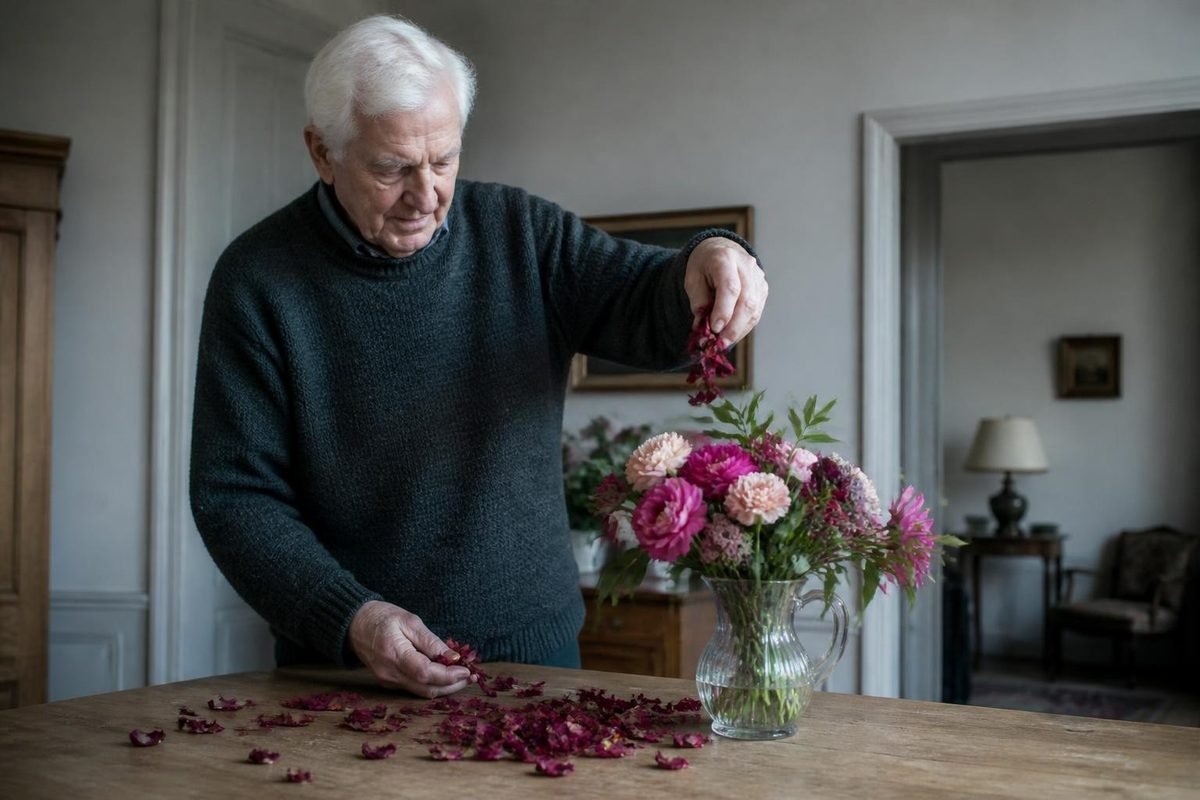
Dried petals, foliage, herbs and reusable fabric ribbons can decorate flowers without adding loose plastic glitter. Their impact still depends on where they come from and how they are used, so choose materials thoughtfully and plan to collect or reuse them afterward.
Add color with petals and foliage
Dried petals make a gentle scattered accent around a table arrangement. Rose petals are one option: dry them, then set them around a vase or slip them between larger blooms. Leave them in relatively large pieces instead of grinding them into dust, which makes them easier to pick up after the event.
Leaves bring another kind of detail. A few small ones at the foot of a centerpiece can add depth without drawing attention away from the flowers. If you have suitable foliage in your garden, use what is already there and gather only as much as you need.
Keep in mind that fresh petals and leaves will change as they dry. They may curl, darken or become delicate. Their gradual change can be part of the display, rather than something you need to conceal.
Make contrast with natural textures
Glitter catches the eye, but differences in texture can also make an arrangement noticeable. Pair smooth petals with fine, feathery foliage, seed heads or a small amount of dried herbs. These contrasts are easiest to see in a simple display with some open space between the stems.
You can use any of these details by themselves or combine a few:
- Scatter dried petals near the vase, but keep them away from food.
- Add a few sprigs of herbs among the flowers for shape and scent.
- Wrap a reusable fabric ribbon around a vase or the stems of a bouquet.
- Arrange gathered leaves in a loose border beneath a centerpiece.
At a dining table, use scented herbs lightly. A strong fragrance may compete with the food, and some guests can be sensitive to smells.
Check what a glitter substitute contains
Not every product called biodegradable glitter is made the same way. Read what it contains and find out what conditions are required for it to break down. Packaging that describes a product as biodegradable does not automatically mean it will decompose in a home compost pile or in water.
Consider how the decoration is attached, too. Loose material is easier to separate than decoration glued onto flowers. Adhesive can make it difficult to reuse or compost the materials afterward. Setting petals around an arrangement instead of sticking them to it makes tidying up more straightforward.
Make cleanup and reuse part of the plan
Once the display has served its purpose, separate ribbons, wire and other nonplant items from the stems. Keep clean ribbon for another bouquet or a gift wrapping. Before putting flowers or foliage in a local compost collection, check its accepted materials. Home composting rules and conditions can vary as well.
Pick up loose petals and leaves from tables and floors instead of letting them reach a drain, where they may add to blockages. If you do not know whether the flowers or foliage were treated with certain substances, consult local disposal advice rather than assuming they are suitable for compost.
A few considered details can give flowers a finished look without leaving tiny glitter particles behind. Sometimes the colors and shapes already in the arrangement are enough, with no extra decoration needed.
On the same subject: long-distance gift ideas
❧